Piano Library
About Boston Piano Company Pianos
Most common makes we have sold
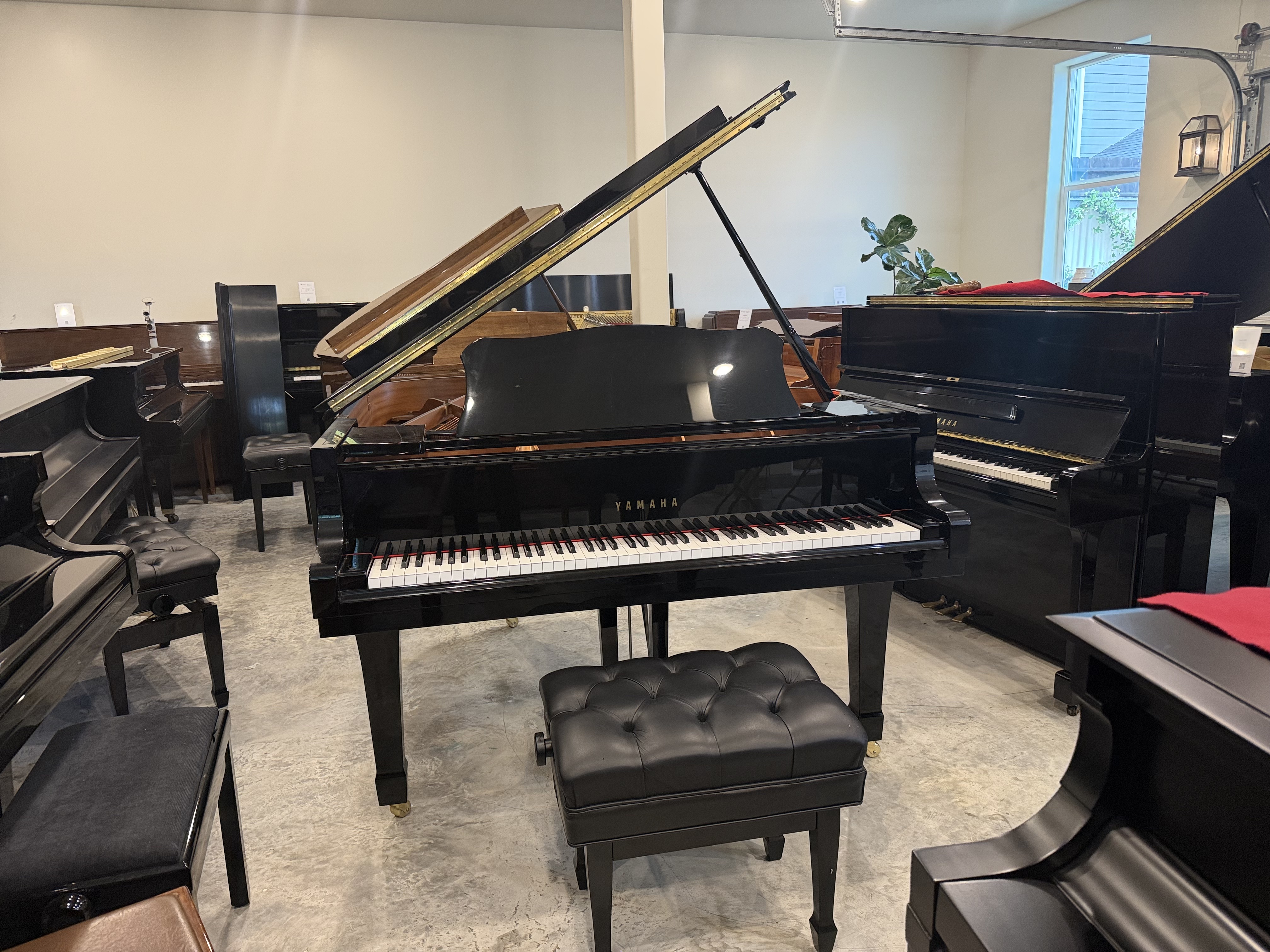
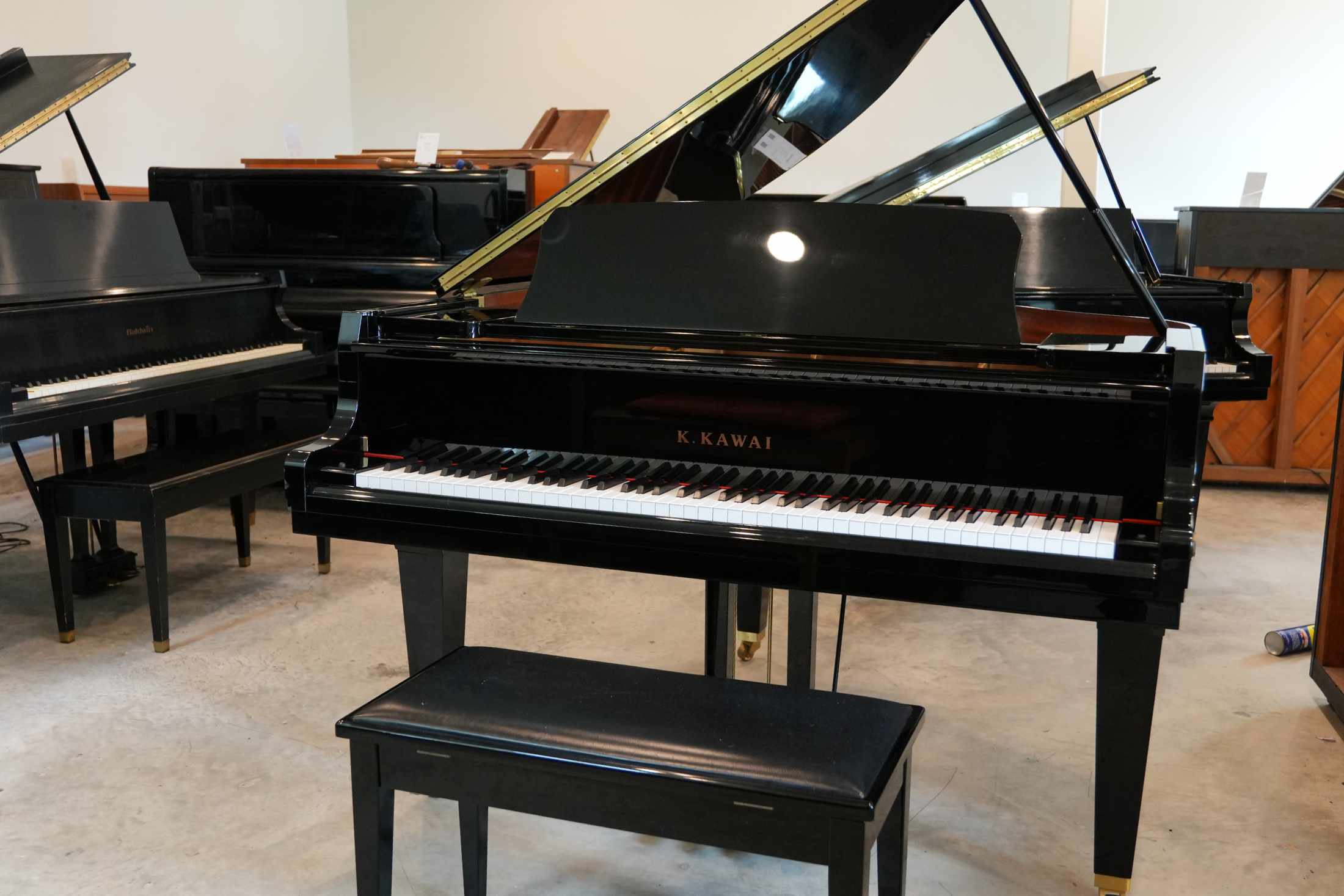
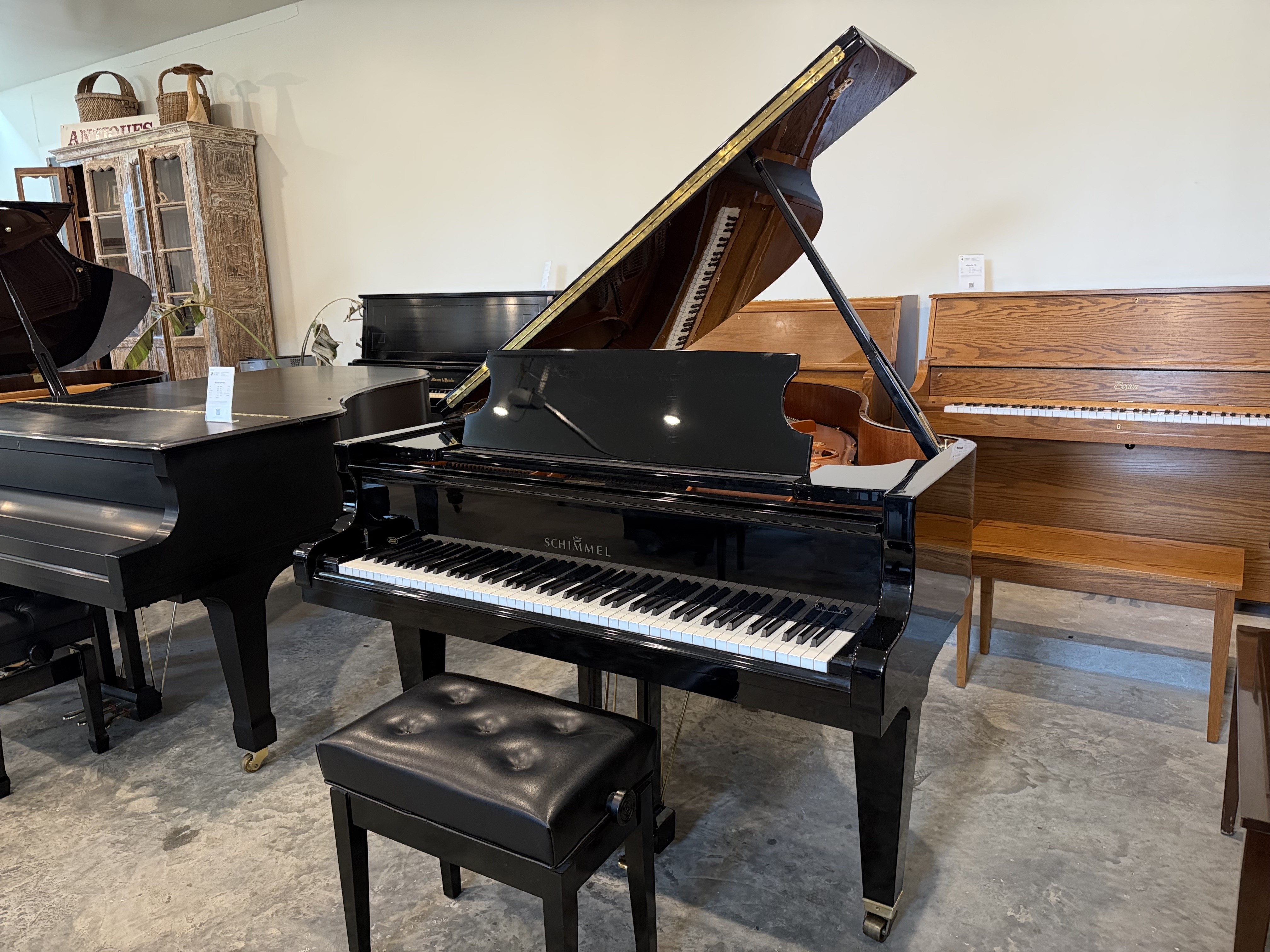

Boston grand in showroom
Overview
Boston Piano Company is a piano brand created in the early 1990s as part of a strategic initiative by Steinway & Sons. The Boston line was conceived to occupy the space between entry-level Asian instruments and premium European and American pianos, offering design concepts associated with Steinway while leveraging modern large-scale manufacturing.
Boston pianos are not built in Steinway's New York or Hamburg factories. Instead, they are produced through international manufacturing partnerships, most notably with Kawai Musical Instruments for many years.
GP-193 (1995)
Wider tail design for longer bass strings and greater soundboard area.

Action and scale design
Origins and Purpose
During the late 20th century, Steinway faced increasing competition from high-quality Japanese pianos that offered strong consistency and affordability. At the same time, Steinway's own instruments were positioned firmly at the premium end of the market.
The Boston brand was introduced to address this gap:
- To offer a piano at a lower price point than Steinway
- To incorporate certain Steinway design philosophies
- To be manufactured at scale with modern efficiency
- To remain clearly distinct from Steinway's flagship instruments
Boston was never intended to replace Steinway, but rather to exist as a separate, clearly defined line.
GP-215 (2000)
Six-foot scale with Steinway-influenced rim geometry.
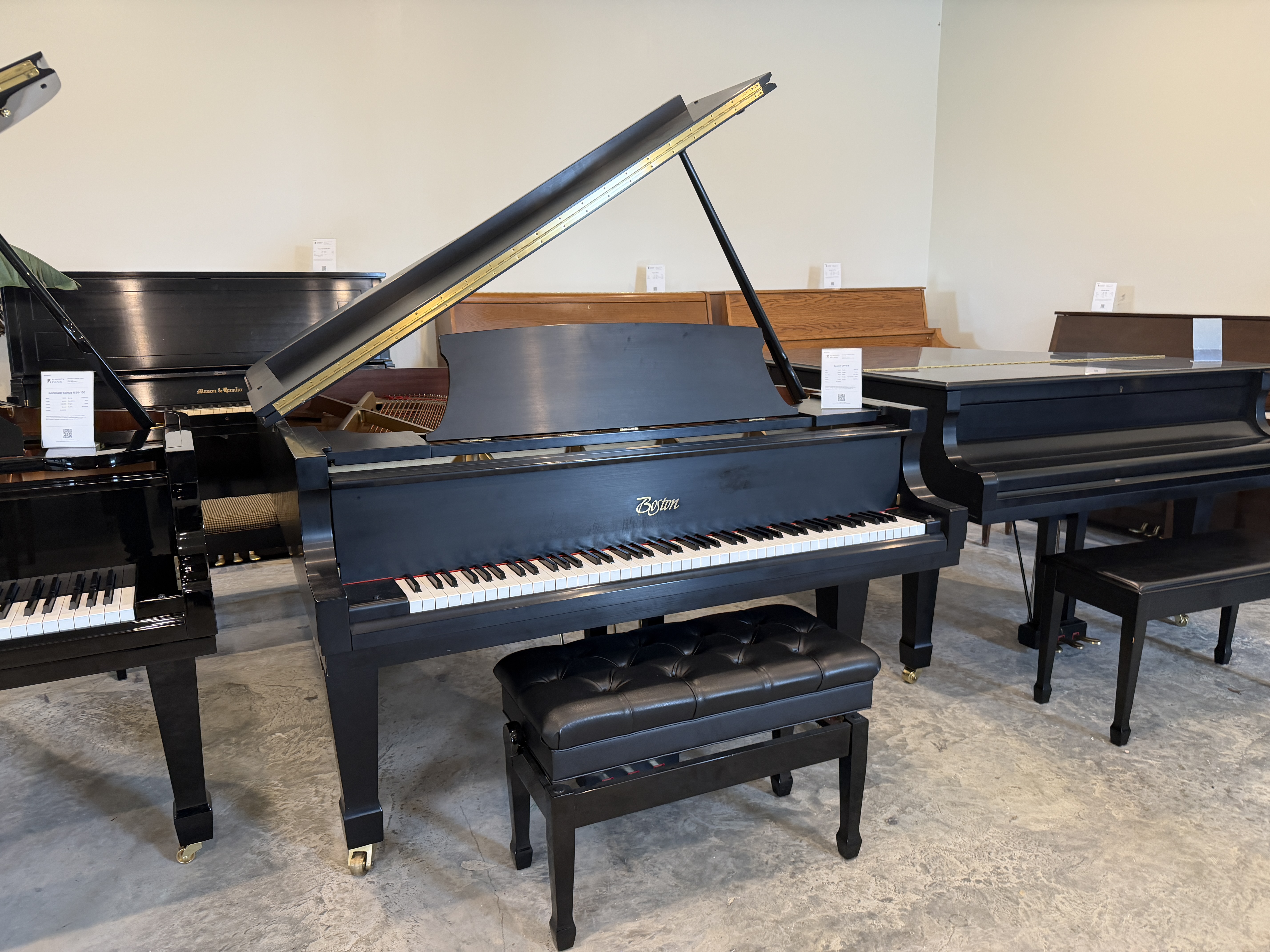
Boston GP 193
Design Philosophy
Boston pianos were designed with input from Steinway engineers, most notably incorporating a wider tail design than was typical for pianos of similar length at the time. This allowed for:
- Longer bass strings
- Greater soundboard area
- Improved bass response relative to size
Other commonly cited design elements include:
- Rim designs influenced by Steinway geometry
- Scale designs aimed at tonal balance rather than maximum brightness
- Actions regulated to emphasize control and evenness
These concepts were then executed within the constraints of modern factory production.
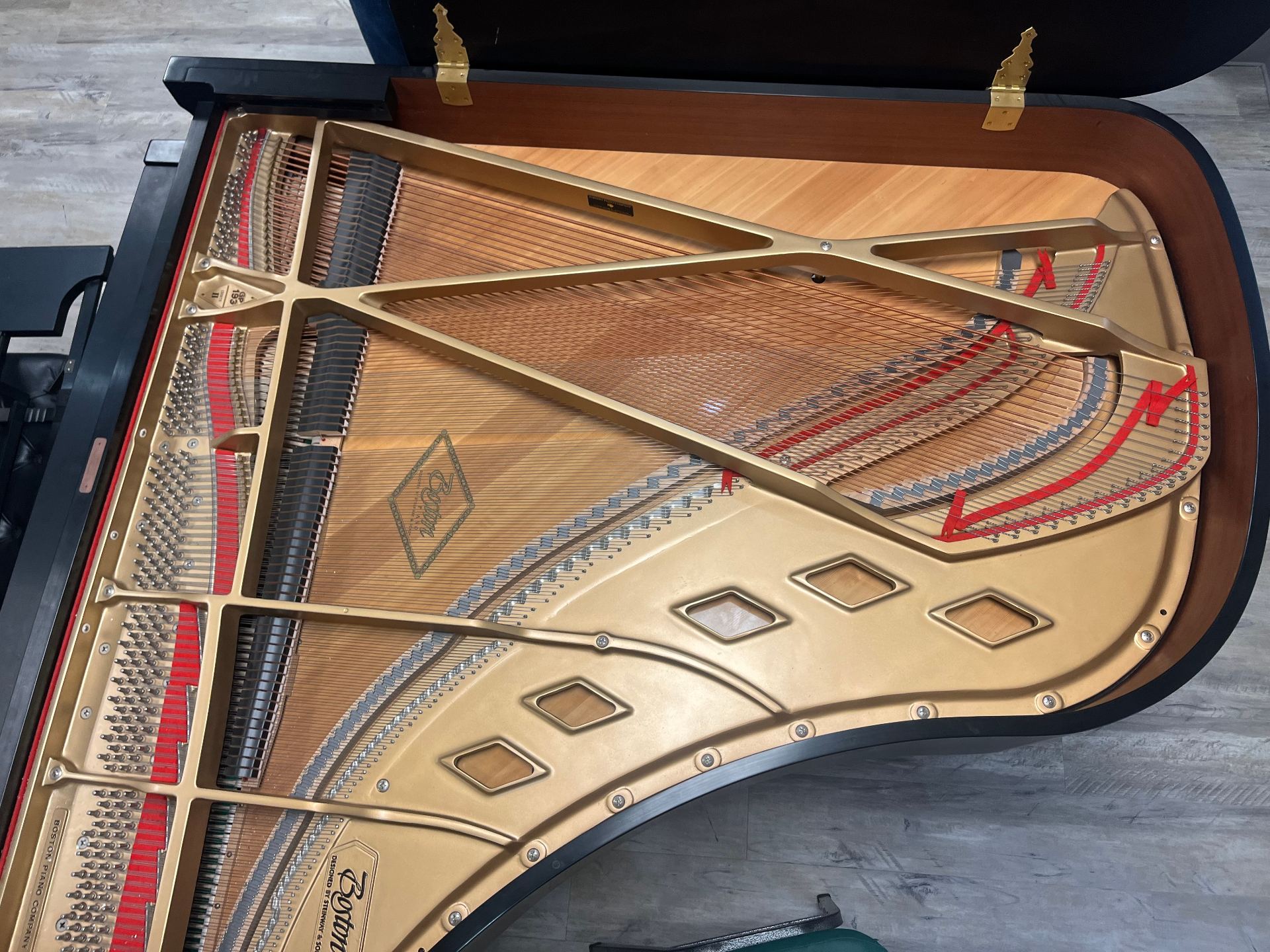
Frame with unique diamond patter Steinway use for Boston grands
Manufacturing and the Kawai Collaboration
For a significant portion of Boston's production history, Boston grands were manufactured by Kawai in Japan. Kawai was chosen due to its reputation for:
- Consistent manufacturing tolerances
- Stable rim and plate production
- Reliable actions and parts supply
- Experience producing instruments for multiple international brands
While Steinway provided design direction and specifications, Kawai handled day-to-day manufacturing. This arrangement allowed Boston pianos to maintain predictable quality while being produced in meaningful volume.
It is important to note:
- Boston pianos are not Steinways
- They are not rebuilt Steinways
- They are purpose-built instruments made to a defined specification
Materials and Construction
Typical Boston grand pianos include:
- Laminated maple rims
- Solid spruce soundboards (species and sourcing varied by era)
- Cast iron plates manufactured to Boston specifications
- Actions using high-quality, industry-standard components
Compared to some competitors, Boston pianos tend to favor structural stability and tonal balance over extreme brightness or lightness of touch.
Tonal Character
While individual instruments vary, Boston grands are often described as:
- Even and controlled across registers
- Clear rather than aggressive
- Moderately warm, especially in mid-range and bass
- Less brilliant than some Japanese counterparts, but also less percussive
These traits made them popular in:
- Homes
- Teaching studios
- Small performance spaces
- Churches and institutions seeking durability
Market Position
Boston grand pianos generally sit in the upper mid-tier of the piano market. They are commonly compared to:
- Yamaha C-series
- Kawai RX / GX-series
- Certain European-branded instruments in similar price ranges
Their appeal has historically been strongest among buyers looking for:
- A conservative, balanced instrument
- Association with Steinway design thinking
- Predictable long-term ownership
Long-Term Considerations
As with any piano, condition matters more than branding alone. Factors such as:
- Pinblock stability
- Soundboard condition
- Action wear
- Regulation and voicing
play a larger role in performance than the name on the fallboard.
Well-maintained Boston grands from the 1990s–2000s can remain solid instruments, particularly when properly regulated and voiced to the player's needs.
Summary
Boston grand pianos represent a deliberate attempt to bridge design philosophy and industrial consistency. They are neither entry-level instruments nor hand-built concert grands, but rather thoughtfully designed pianos built to serve a wide range of musical contexts.
Their collaboration with Kawai remains a key part of their history, and their place in the market is best understood not through marketing claims, but through careful evaluation of each individual instrument.
Features by model
GP-193 (1995)
Wider tail design for longer bass strings and greater soundboard area.
GP-215 (2000)
Six-foot scale with Steinway-influenced rim geometry.
Related makes from the same factory
Photos from our Boston Piano Company pianos
Boston GP 193
Frame with unique diamond patter Steinway use for Boston grands
Disclaimer: The information provided on this page is for general informational purposes only. While we strive to provide accurate and up-to-date information about piano manufacturers, we make no representations or warranties of any kind, express or implied, about the completeness, accuracy, reliability, suitability, or availability of the information contained herein. Any reliance you place on such information is strictly at your own risk. The views and opinions expressed are those of the author and do not necessarily reflect the official policy or position of Roberts Pianos Houston or any manufacturer mentioned. We are not affiliated with, endorsed by, or sponsored by any piano manufacturer unless explicitly stated.
Models and origins
| Model | Origin | Range |
|---|---|---|
| GP 193 | Hamamatsu, Japan | — |
Current & previously sold Boston Piano Company
Videos of Boston Piano Company pianos we've had in stock
Models we've stocked
View details, history, and reviews for each model where we have photos.